© Copyright 2020 Vanni VERONESI. All rights reserved.
Privacy Notice (ITALIANO) / Privacy Policy (ENGLISH)Cookie Notice (ITALIANO) / Cookies information (ENGLISH)
TÉMOIGNAGES VIDÉO DE PATIENTS OPÉRÉS POUR LA SECTION DU FILUM TERMINALE EXTRADURAL PAR TECHNIQUE CHIRURGICALE MINI-INVASIVE SOUS ANESTHÉSIE LOCALE
PATHOLOGIES : Le syndrome de la moelle attachée et le syndrome de la moelle attachée occulte peuvent être associés au syndrome d’Ehlers-Danlos, à une instabilité craniocervicale, à une descente légère (1 à 4 mm) des amygdales cérébelleuses ou à une malformation de Chiari.
SYMPTÔMES : Hormis les symptômes liés au contrôle des sphincters urinaire et fécal, ceux situés dans la région lombaire et les membres inférieurs n’empêchent que rarement la marche normale.
Nous avons filmé les quelques patients qui, avant l'opération, présentaient des symptômes les empêchant de marcher normalement.
Nous avons filmé les patients après leur intervention chirurgicale mini-invasive innovante, réalisée sous anesthésie locale, pour sectionner le filum extradural, et documenter les bénéfices immédiats.
LES VIDÉOS DES TÉMOIGNAGES DES PATIENTS ET MES INTERVIEWS TÉLÉVISÉES ORIGINALES SONT EN ITALIEN ET DISPONIBLES SUR CETTE PAGE.
Grâce à l'intelligence artificielle, elles sont également disponibles en anglais et en français (voir encadré ci-dessous).
CHIRURGIE DE LA COLONNE VERTÉBRALE DE POINTE
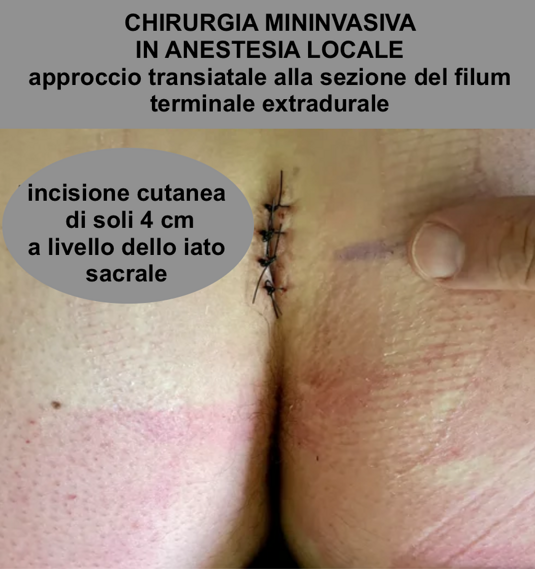
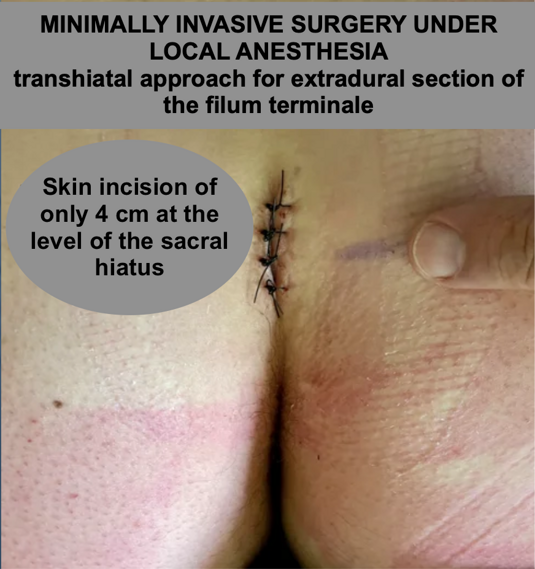
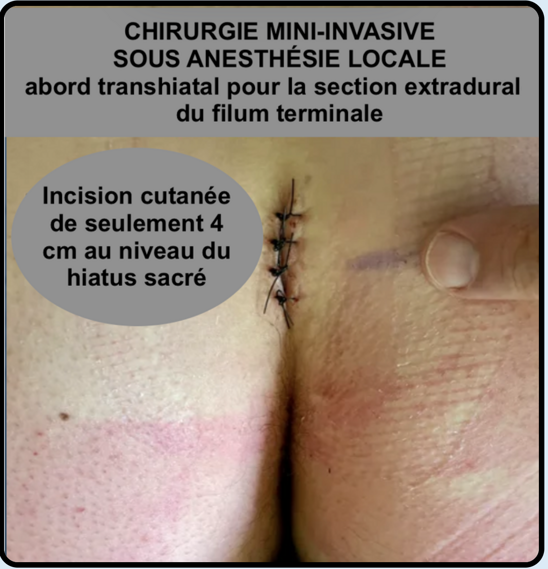
LES PATIENTS PRÉSENTÉS DANS LES VIDÉOS ONT SUBI UNE CHIRURGIE MINIMALE INVASIVE DE SECTION DU FILUM TERMINALE SOUS ANESTHÉSIE LOCALE.
L'intervention chirurgicale dure environ 25 minutes.
Une heure après l'opération, le patient peut marcher, manger et boire.
In English.
- Televised interviews
- Video testimonials from patients who experienced walking difficulties that disappeared after surgical sectioning of the extradural filum terminale.
En Français.
- ENTRETIENS TÉLÉVISÉS
- TÉMOIGNAGES VIDÉO de patients ayant des difficultés à marcher, qui ont disparu après la section chirurgicale du filum terminale extradural.
@veronesisectionfilumterminale
In this playlist, you will find the following:
- TV interviews on occult tethered cord syndrome (OTCS) and tethered cord syndrome (TCS) treated with a minimally invasive surgical procedure consisting of cutting the extradural Filum Terminale under local anaesthesia;
- Video testimonials in which it is possible to evaluate the postoperative clinical outcome of the extradural section of the filum terminale by the minimally invasive procedure under local anaesthesia in patients with preoperative gait disorders.
@veronesisectionfilumterminale
Dans cette playlist vous trouverez:
- Interviews télévisées sur le syndrome de la moelle épinière attachée occulte (oTCS) et syndrome de la moelle épinière attachée (TCS) traité par une chirurgie mini-invasive consistant à couper le Filum Terminale extradural sous anesthésie locale;
- Témoignages vidéo dans lesquels il est possible d'évaluer le résultat clinique postopératoire de la section extradurale du filum terminal par chirurgie mini-invasive sous anesthésie locale chez des patients présentant des troubles de la marche préopératoires.
Cas cliniques avec témoignages vidéo pré et postopératoires.
Vidéo originale en italien : pour les traductions en anglais et en français, consultez le lien ci-dessus.
Cas « ZÉRO » (une étape importante pour la chirurgie mini-invasive de la colonne vertébrale)
Homme de 65 ans
Syndrome de la moelle attachée (S2)
Cas « ZÉRO » : le premier traitement chirurgical mini-invasif de section extradurale du filum terminale, sous anesthésie locale, publié dans une revue scientifique, chez un patient confiné à un fauteuil roulant en raison de symptômes invalidants l’empêchant de marcher.
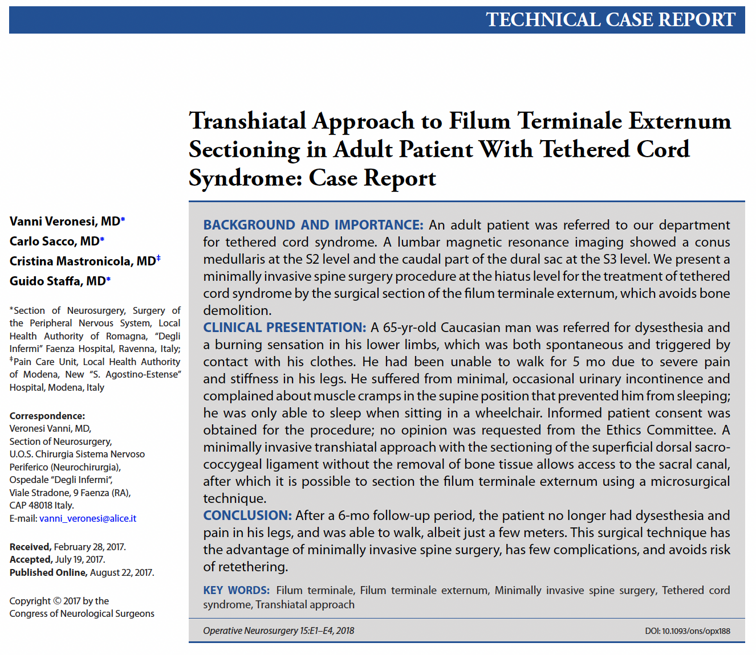
Le cas « ZÉRO » a fait l’objet d’une publication sous forme de RAPPORT DE CAS TECHNIQUE sur la technique chirurgicale innovante mini-invasive sous anesthésie locale, que nous pratiquons depuis 2010, dans la prestigieuse revue scientifique internationale :
OPERATIVE NEUROSURGERY
HISTORIQUE DU PATIENT
Un homme de 65 ans se plaignait de dysesthésies des membres inférieurs, accompagnées de sensations de brûlure, spontanées ou déclenchées par le toucher et le contact avec les vêtements. Il était incapable de marcher depuis cinq mois en raison de douleurs et de raideurs intenses des membres inférieurs. Il souffrait d'une incontinence urinaire légère et occasionnelle. En position couchée, il se plaignait de crampes musculaires des membres inférieurs qui l'empêchaient de dormir ; il ne parvenait à dormir qu'en fauteuil roulant, les jambes fléchies. Une intervention chirurgicale orthopédique des genoux lui avait été conseillée en raison d'une gonarthrose tricompartimentale sévère, mais les symptômes neurologiques avaient conduit à son report.
CONSULTATION POST-OPÉRATOIRE À DISTANCE
(voir la vidéo ci-dessus)
Une amélioration clinique significative a été observée lors des consultations de suivi à 3 et 6 mois postopératoires. Le patient n'était plus alité ni en fauteuil roulant, était autonome pour les actes de la vie quotidienne et pouvait marcher, même sur de courtes distances.
Il ne souffrait plus de dysesthésie ni de douleurs aux membres inférieurs et ne présentait plus de crampes musculaires en position couchée l'empêchant de dormir. Des crampes musculaires, d'intensité légère, survenaient occasionnellement le soir. Les épisodes d'incontinence urinaire, minimes et occasionnels, étaient restés inchangés.
La mobilisation active et passive des membres inférieurs ne provoquait aucun symptôme et le patient ne présentait aucun déficit de force musculaire.

CAS 1
Femme de 38 ans
Syndrome de la moelle attachée occulte : vidéo originale en italien

CAS 2
Femme de 37 ans
Syndrome de la moelle attachée occulte : vidéo originale en italien
CAS 3
Homme de 48 ans
Syndrome de la moelle attachée occulte : vidéo originale en italien
CAS 4
Femme de 39 ans
Syndrome de moelle attachée (L2) chez un patient présentant une descente légère (entre 1 et 4 mm) des amygdales cérébelleuses (LLCT) : vidéo originale en italien
CAS 5
Femme de 36 ans
Syndrome de moelle attachée occulte chez un patient atteint du syndrome d'Ehlers-Danlos, de fibromyalgie et de neuropathie des petites fibres : vidéo originale en italien
CAS 6
Femme de 24 ans
Syndrome de moelle attachée occulte chez un patient présentant une descente légère (entre 1 et 4 mm) des amygdales cérébelleuses (LLCT) et une syringomyélie dorsale : vidéo originale en italien
CAS 7
Fille de 13 ans
Syndrome de moelle attachée occulte chez un patient présentant une hydromyélie cervico-dorsale et un tremblement orthostatique : vidéo originale en italien
CASE 8
Femme de 38 ans
Syndrome du cordon attaché (L2) avec filum terminal graisseux : vidéo originale en italien
CAS 9
Femme de 55 ans
Syndrome de la moelle attachée occulte : vidéo originale en italien
CAS 10
Femme de 44 ans
Syndrome de la moelle attachée (L2) dans la malformation de Chiari de type I et la syringomyélie cervico-dorsale : vidéo originale en italien
CAS 11
Femme de 45 ans
Syndrome de moelle attachée occulte dans la malformation de Chiari de type I : vidéo originale en italien
CAS 12
Femme de 31 ans
Syndrome de moelle attachée occulte chez un patient présentant une descente légère (entre 1 et 4 mm) des amygdales cérébelleuses (LLCT) : vidéo originale en italien
CAS 13
Fille de 15 ans
Syndrome de la moelle attachée occulte : vidéo originale en italien
