The reasons why I consider this scientific article published in 2009 a milestone on this subject are many: the authority of the Authors, the large case series of over 3000 patients, the fact that they also evaluated the mild descent of the cerebellar tonsils (Low-Lying Cerebellar Tonsils) and not only the descent of the cerebellar tonsils sufficient to configure Chiari type I malformation (CM1), and the correlation of the various descents of the cerebellar tonsils with tethered cord syndrome and occult tethered cord syndrome.
I would like to point out that the surgical treatment of tethered cord syndrome and occult tethered cord syndrome was performed under GENERAL ANESTHESIA with section of the INTRADURAL FILUM TERMINALE.
My minimally invasive surgical procedure under LOCAL ANESTHESIA for the EXTRADURAL section of the FILUM TERMINALE, which I will discuss further here and on other pages of the website, was published later in 2018, although I have been performing it since 2010.
© Copyright 2020 Vanni VERONESI. All rights reserved.
Privacy Notice (ITALIANO) / Privacy Policy (ENGLISH)Cookie Notice (ITALIANO) / Cookies information (ENGLISH)
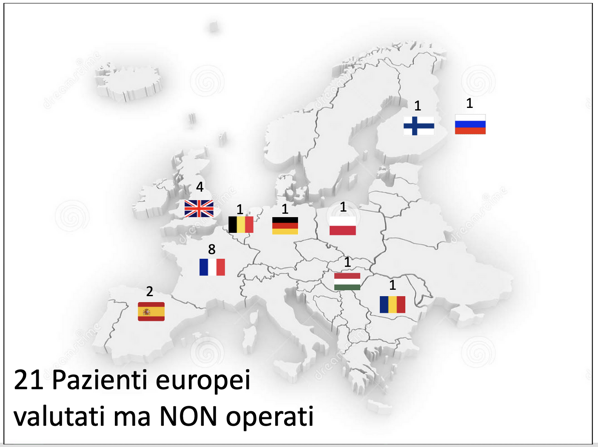
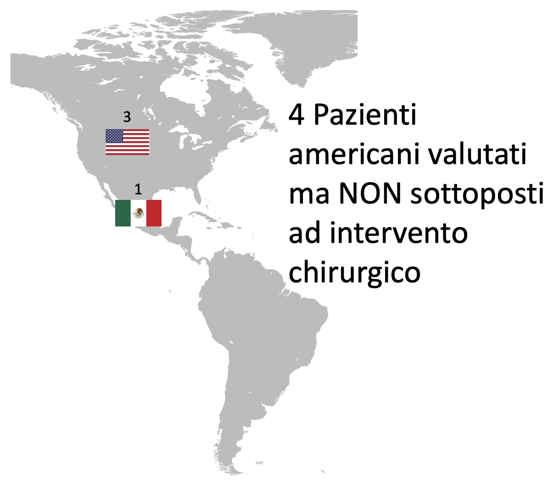
- FOREIGN PATIENTS ASSESSED
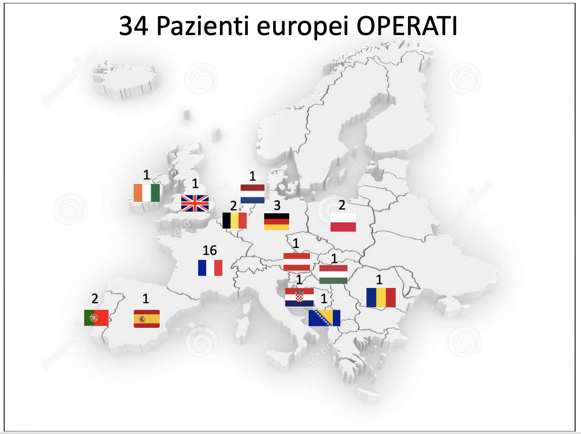
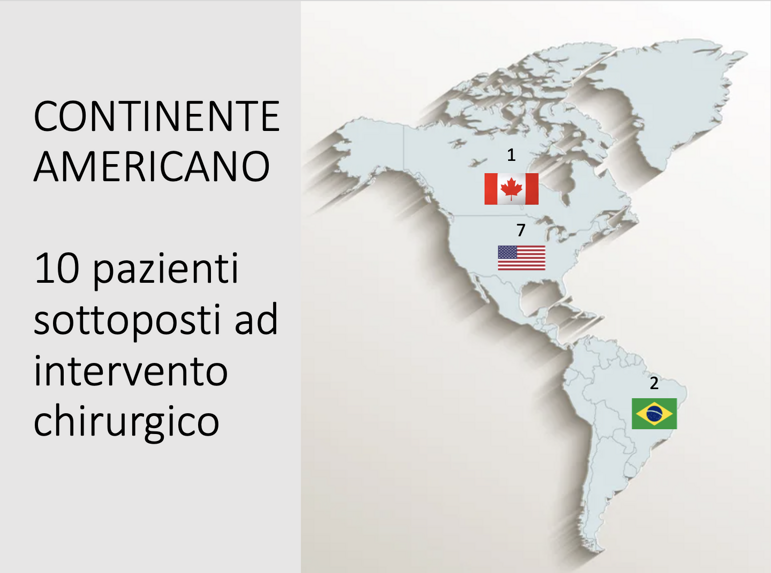
- FOREIGN PATIENTS OPERATED
EUROPEAN PATIENTS
AMERICAN PATIENTS

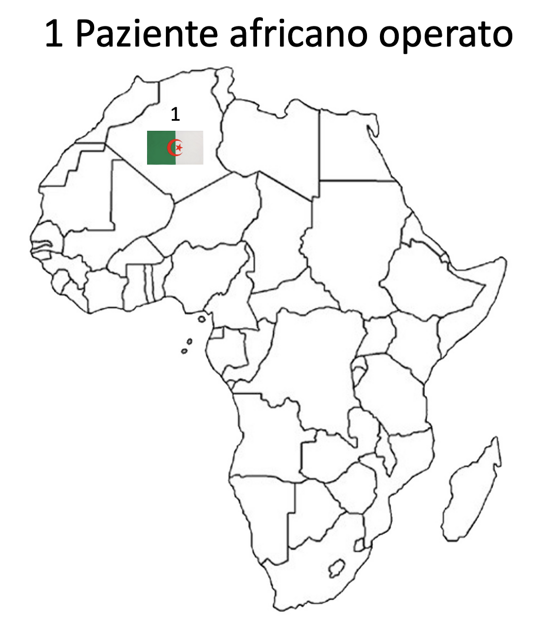
TOTAL
68 FOREIGN PATIENTS
55 EUROPEAN PATIENTS

12 AMERICAN PATIENTS
1 AFRICAN PATIENT
43 FOREIGN PATIENTS (AND MORE THAN 400 ITALIAN PATIENTS) UNDERWENT THE INNOVATIVE MINIMALLY INVASIVE SURGICAL TREATMENT UNDER LOCAL ANESTHESIA OF EXTRADURAL FILUM TERMINALE SECTION (EXTERNUM) WITH SMALL SKIN INCISION AND MICRO-SURGICAL TECHNIQUE
- September 2025, 38-year-old woman from FRANCE.
DIAGNOSIS: OCCULT TETHERED CORD SYNDROME IN PATIENT WITH CHIARI MALFORMATION TYPE I AND SMALL DORSAL SYRINGOMYELIA.
- August 2025, 21-year-old woman from SPAIN.
DIAGNOSIS: OCCULT TETHERED CORD SYNDROME IN PATIENT WITH SMALL INTRADURAL LIPOMATOUS FILUM.
- June 2025, 12-year-old girl from the UNITED STATES OF AMERICA.
DIAGNOSIS: OCCULT TETHERED CORD SYNDROME IN PATIENT WITH CHIARI MALFORMATION TYPE I, STIFF BABY SYNDROME AND HYPEREKPLEXIA.
- June 2025, 39-year-old man from BELGIUM.
DIAGNOSIS: OCCULT TETHERED CORD SYNDROME IN PATIENT WITH MILD DESCENT OF THE CEREBELLAR TONSILS (LOW LYING CEREBELLAR TONSILS - LLCT) AND DORSAL HYDROMYELIA.
- May 2025, a 44-year-old woman from FRANCE.
DIAGNOSIS: OCCULT TETHERED CORD SYNDROME IN PATIENT WITH CHIARI MALFORMATION TYPE I.
- May 2025, a 20-year-old woman from the
UNITED STATES OF AMERICA
.
DIAGNOSIS: OCCULT TETHERED CORD SYNDROME IN A PATIENT WHO UNDERWENT SURGICAL CRANIAL DECOMPRESSION IN THE UNITED STATES OF AMERICA FOR THE TREATMENT OF CHIARI MALFORMATION TYPE I.
- March 2025, 39-year-old woman from CROATIA.
DIAGNOSIS: OCCULT TETHERED CORD SYNDROME in a patient with a diagnosis of POTS and Ehlers-Danlos syndrome, with a history of previous cranio-cervical stabilization surgery for cranio-cervical (CCI) and atlanto-axial (AAI) instability.
The European Directive 2011/24/EU facilitates access to safe and high-quality cross-border healthcare, guarantees patient mobility, and promotes cooperation in healthcare matters among the Member States of the European Union, while respecting national competences regarding the organization of their own healthcare systems.
Cross-border healthcare is fundamental for rare diseases.
European collaboration in this sector is invaluable and is based on the exchange of knowledge and expertise.
According to the directive on cross-border healthcare, patients can access care and treatments in another European country, allowing patients with rare diseases to benefit from cutting-edge treatments suited to their condition.
The application of the aforementioned European directive depends on the medical commission of the competent health insurance institution in the country where the patient resides, which authorizes surgical treatment abroad through the S2 form.
The medical commission of his country considered the impossibility of performing this minimally invasive surgery in CROATIA and, considering ours a center of excellence, applied the European directive 2011/24/EU for cross-border healthcare and, using the S2 form, the expenses were covered by the CROATIAN Health System.
- December 2024, 56-year-old man AMERICAN at the time in Germany for work reasons.
DIAGNOSIS: TETHERED CORD SYNDROME (L2-L3) in a patient with a previous diagnosis of cranio-cervical instability (CCI) and atlanto-axial instability (AAI).
- September 2024, 29-year-old man from POLAND.
DIAGNOSIS: OCCULT TETHERED CORD SYNDROME.
- July 2024, 13-year-old boy from GERMANY.
DIAGNOSIS: TETHERED CORD SYNDROME (L2) IN PATIENT WITH SCOLIOSIS AND DORSAL HYDROMYELIA.
The European Directive 2011/24/EU facilitates access to safe and high-quality cross-border healthcare, guarantees patient mobility, and promotes cooperation in healthcare among the Member States of the European Union, while respecting national competences regarding the organization of their own healthcare systems.
Cross-border healthcare is essential for rare diseases.
European collaboration in this sector is invaluable and is based on the exchange of knowledge and expertise.
According to the directive on cross-border healthcare, patients can access care and treatments in another European country, allowing patients with rare diseases to benefit from cutting-edge treatments suited to their condition.
The application of the aforementioned European directive depends on the medical commission of the competent health insurance institution in the country where the patient resides, which authorizes surgical treatment abroad through the S2 form.
The medical commission of your country considered the impossibility of performing this minimally invasive surgery in GERMANY and, considering our center as a center of excellence, applied the European directive 2011/24/EU for cross-border healthcare and, using the S2 form, the expenses were covered by the GERMAN Health System.
- July 2024, 33-year-old woman from FRANCE.
DIAGNOSIS: OCCULT TETHERED CORD SYNDROME IN A PATIENT WITH CHIARI MALFORMATION TYPE I AND SYRINGOMYELIA C7-D1.
- May 2024, 25-year-old woman coming from FRANCE.
DIAGNOSIS: OCCULT TETHERED CORD SYNDROME IN PATIENT WITH CERVICAL AND DORSAL HYDROMYELIA.
- March 2024, 24-year-old man from FRANCE.
DIAGNOSIS: OCCULT TETHERED CORD SYNDROME IN A PATIENT WITH CHIARI MALFORMATION TYPE I AND CERVICAL AND DORSAL HYDROMYELIA.
- February 2024, 35-year-old woman from FRANCE.
DIAGNOSIS: OCCULT TETHERED CORD SYNDROME IN PATIENT WITH CHIARI MALFORMATION TYPE I.
- December 2023, 31-year-old woman from GERMANY.
DIAGNOSIS: OCCULT TETHERED CORD SYNDROME IN A PATIENT WITH CRANIOCERVICAL INSTABILITY.
- October 2023, 34-year-old man coming fromALGERIA.
DIAGNOSIS: OCCULT TETHERED CORD SYNDROME.
- September 2023, 42-year-old woman, coming fromAUSTRIA.
DIAGNOSIS: OCCULT TETHERED CORD SYNDROME IN A PATIENT WITH CHIARI MALFORMATION TYPE I.
- September 2023, 37-year-old woman, coming from the UNITED STATES OF AMERICA.
DIAGNOSIS: OCCULT TETHERED CORD SYNDROME IN A PATIENT WITH SUSPECTED EHLERS-DANLOS SYNDROME.
- September 2023, 25-year-old man, coming from PORTUGAL.
DIAGNOSIS: OCCULT TETHERED CORD SYNDROME IN A PATIENT WITH DORSAL SYRINGOMYELIA.
-July 2023, 35-year-old woman, coming from FRANCE.
DIAGNOSIS: OCCULT TETHERED CORD SYNDROME IN PATIENT WITH CHIARI MALFORMATION TYPE I.
- May 2023, 23-year-old woman, coming from the UNITED STATES OF AMERICA.
DIAGNOSIS: OCCULT TETHERED CORD SYNDROME IN A PATIENT WITH EHLERS-DANLOS SYNDROME.
- May 2023, 39-year-old woman, coming from PORTUGAL.
DIAGNOSIS: OCCULT TETHERED CORD SYNDROME IN PATIENT WITH CHIARI MALFORMATION TYPE I.
- April 2023, 34-year-old woman, coming from theFRANCE.
DIAGNOSIS: OCCULT TETHERED CORD SYNDROME IN PATIENT WITH CHIARI MALFORMATION TYPE I.
- March 2023, 34-year-old woman, coming from FRANCE.
DIAGNOSIS: OCCULT TETHERED CORD SYNDROME IN A PATIENT WITH CHIARI MALFORMATION TYPE I.
- December 2022, 25-year-old man, coming from the FRANCE.
DIAGNOSIS: OCCULT TETHERED CORD SYNDROME IN A PATIENT WITH MILD DESCENT OF THE CEREBELLAR TONSILS (LLCT = LOW LYING CEREBELLAR TONSILS) AND DORSAL HYDROMYELIA.
- June 2022, 18-year-old woman, coming fromIRELAND.
DIAGNOSIS: OCCULT TETHERED CORD SYNDROME IN PATIENT WITH MILD DESCENT OF THE CEREBELLAR TONSILS (LLCT = LOW LYING CEREBELLAR TONSILS).
- June 2022, 29-year-old woman, coming from NETHERLANDS.
DIAGNOSIS: OCCULT TETHERED CORD SYNDROME.
- March 2022, 30-year-old man, coming from GERMANY.
DIAGNOSIS: OCCULT TETHERED CORD SYNDROME IN PATIENT WITH CERVICAL SYRINGOMYELIA AND SCOLIOSIS.
- May 2021, 22-year-old woman, coming from FRANCE.
DIAGNOSIS: OCCULT TETHERED CORD SYNDROME IN PATIENT WITH MILD DESCENT OF THE CEREBELLAR TONSILS (LLCT = LOW LYING CEREBELLAR TONSILS).
- May 2021, 42-year-old man, coming from the FRANCE.
DIAGNOSIS: OCCULT TETHERED CORD SYNDROME.
- May 2021, 39-year-old woman, coming from FRANCE.
DIAGNOSIS: OCCULT TETHERED CORD SYNDROME IN A PATIENT WHO UNDERWENT CRANIAL DECOMPRESSION IN FRANCE FOR THE TREATMENT OF CHIARI MALFORMATION TYPE I.
- May 2021, 40-year-old man, coming from the from theENGLAND.
DIAGNOSIS: OCCULT TETHERED CORD SYNDROME IN PATIENT WITH MILD DESCENT OF THE CEREBELLAR TONSILS (LLCT = LOW LYING CEREBELLAR TONSILS).
- May 2021, 31-year-old woman, coming from ROMANIA.
DIAGNOSIS: OCCULT TETHERED CORD SYNDROME IN A PATIENT WHO UNDERWENT CRANIOCERVICAL STABILIZATION SURGERY IN SPAIN FOR THE TREATMENT OF CRANIOCERVICAL INSTABILITY.
- March 2020, 32-year-old woman, coming from FRANCE..
DIAGNOSIS: OCCULT TETHERED CORD SYNDROME IN PATIENT WITH CHIARI MALFORMATION TYPE I.
- October 2019, 53-year-old woman, coming from the FRANCE.
DIAGNOSIS: OCCULT TETHERED CORD SYNDROME IN PATIENT WITH CERVICO-DORSAL HYDROMYELIA AND SCOLIOSIS.
- September 2019, 35-year-old man, coming from BELGIUM.
DIAGNOSIS: TETHERED CORD SYNDROME (L2-L3) IN PATIENT WITH MILD DESCENT OF THE CEREBELLAR TONSILS (LLCT = LOW LYING CEREBELLAR TONSILS) AND CERVICAL SYRINGOMYELIA.
- May 2019, 45-year-old woman from the FRANCE.
DIAGNOSIS: OCCULT TETHERED CORD SYNDROME IN A PATIENT WITH CHIARI MALFORMATION TYPE I.
- March 2019, 49-year-old woman from BRAZIL.
DIAGNOSIS: OCCULT TETHERED CORD SYNDROME IN PATIENT WITH CHIARI MALFORMATION TYPE I.
- March 2019, 36-year-old man from the UNITED STATES OF AMERICA.
DIAGNOSIS: OCCULT TETHERED CORD SYNDROME IN PATIENT WITH CERVICO-DORSAL SYRINGOMYELIA.
- January 2019, first patient coming from another continent, 28-year-old woman coming from the BRAZIL.
DIAGNOSIS: OCCULT TETHERED CORD SYNDROME IN A PATIENT WHO UNDERWENT TWO CRANIAL DECOMPRESSION SURGERIES IN BRAZIL FOR THE TREATMENT OF CHIARI MALFORMATION TYPE I.
- September 2018, 25-year-old man from POLAND.
DIAGNOSIS: OCCULT TETHERED CORD SYNDROME IN PATIENT WITH CERVICAL SYRINGOMYELIA.
- October 2017, 33-year-old man fromHUNGARY.
DIAGNOSIS: OCCULT TETHERED CORD SYNDROME.
The European Directive 2011/24/EU facilitates access to safe and high-quality cross-border healthcare, guarantees patient mobility, and promotes cooperation in healthcare matters among the Member States of the European Union, while respecting national competences regarding the organization of their own healthcare systems.
Cross-border healthcare is essential for rare diseases.
European collaboration in this sector is invaluable and is based on the exchange of knowledge and expertise.
According to the directive on cross-border healthcare, patients can access care and treatments in another European country, allowing patients with rare diseases to benefit from cutting-edge treatments suited to their condition.
The application of the aforementioned European directive depends on the medical commission of the health insurance institution competent in the country where the patient resides, which authorizes surgical treatment abroad through the S2 form.
The medical commission of his country considered the impossibility of performing this minimally invasive surgery in HUNGARY and, considering ours a center of excellence, applied the European directive 2011/24/EU for cross-border healthcare and, using the S2 form, the expenses were covered by the HUNGARIAN Health System.
The medical commission of your country considered the impossibility of performing this minimally invasive surgery in Hungary and, considering our center as a center of excellence, applied the European directive 2011/24/EU for cross-border healthcare and, using the S2 form, the expenses were covered by the Hungarian Health System;
- In 2015, the first foreign patient, a 36-year-old man from BOSNIA.
DIAGNOSIS: OCCULT TETHERED CORD SYNDROME.
FROM 2010 TO TODAY, ABOUT 400 ITALIAN PATIENTS, COMING FROM 18 OF THE 20 ITALIAN REGIONS, HAVE UNDERGONE MINIMALLY INVASIVE SURGICAL SECTION OF THE EXTRADURAL FILUM TERMINALE UNDER LOCAL ANESTHESIA.

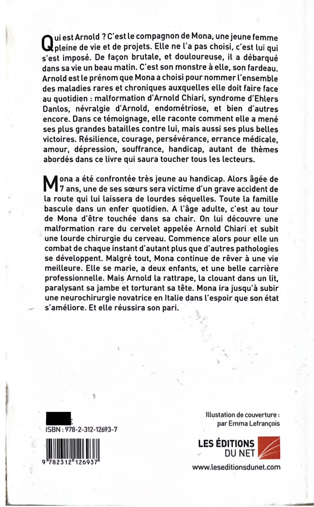
Testimony of a French patient
Book written by a French patient previously operated on in France for cranial decompression to treat Chiari malformation.
The patient was subsequently operated on in Italy by myself using the minimally invasive surgical technique of sectioning the extradural filum terminale under local anesthesia for the treatment of occult tethered cord syndrome.
On the left, image of the book cover; on the right, image of the back cover of the book.
The book is written in French.
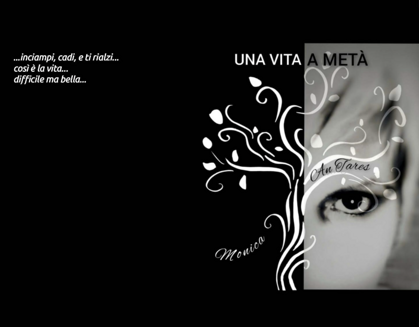
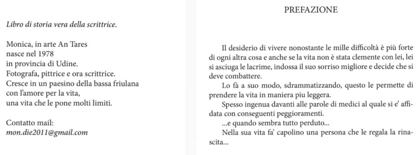
Testimony of an Italian patient
Book written by an Italian patient with Chiari malformation operated on by myself with the minimally invasive surgical technique of sectioning the extradural filum terminale under local anesthesia for the treatment of occult tethered cord syndrome.
On the left, the cover image of the book; on the right, the image of the preface.
The book is written in Italian.
CLICK HERE to watch her video testimony, case no. 11, on the page dedicated to video testimonials within the website.
CLICK HERE to connect directly to her video testimony on my YouTube channel.
Review on the Qsalute website of the first foreign patient,
he is a 36-year-old man from Bosnia who underwent surgery in 2015
Italy should be proud
After years of searching for the cause of my problems, there was a suspicion that I was suffering from a rare condition called occult tethered cord syndrome. The doctors in my country know very little about this condition, so we needed help to get the right diagnosis. On the internet I found an email address for Dr. Veronesi and I asked him if he also treated international patients. A few days later, the answer was in my inbox: of course I treat them, what is your problem, what needs to be solved?
First of all, he helped me get a correct diagnosis, he sent me a document describing a way to do a prone MRI, thus allowing me to have a lumbar MRI in the prone position at the hospital in my country. He was under no obligation to do this, I live in another country. I immediately realized that he is an extraordinary man. Then I went for a first check-up in Italy, and the surgery was scheduled for about a year later. The operation is quick and painless and the hospital stay is short. My recovery was incredible, my condition improved very quickly after the operation: there was no back pain, the leg pain was gone, the urological condition started to improve and I was sleeping much better than before the surgery. A year after the operation my condition improved further, only mild urological problems are still present. It is important to note that I am 38 years old, so I am a case of adult occult tethered cord syndrome, neglected for years because the doctors in my country did not know how to help me. I didn't know what to expect, but the surgery was effective and successful. Now my life is easier, my problems are less after the surgery. This is the professionalism of Dr. Veronesi, he is truly remarkable, an honest man, not easy to find these days. Thanks also to Dr. Sacco and all the hospital staff. Italy should be proud of you!
MEDICAL CONSIDERATIONS FOR PATIENTS IN WHOM TETHERED CORD IS ASSOCIATED WITH CHIARI MALFORMATION TYPE I
THE TETHERED CORD OR OCCULT TETHERED CORD CAN BE ASSOCIATED WITH CHIARI MALFORMATION TYPE I, IT IS NOT ALWAYS POSSIBLE TO CLEARLY AND DEFINITIVELY ESTABLISH THE BOUNDARY BETWEEN THE SYMPTOMS OF ONE OR THE OTHER CONDITION.
THE SYMPTOMS USUALLY ASSOCIATED WITH TETHERED CORD OR OCCULT TETHERED CORD ARE: LUMBAR OR SACRAL PAIN, IN THE LOWER LIMBS THERE MAY BE PAIN, PARESTHESIA, AND EASY FATIGUE, AND THERE MAY BE DISTURBANCES IN THE CONTROL OF URINARY AND FECAL SPHINCTERS.
THE SECTION OF THE EXTRADURAL FILUM TERMINALE WITH MICRO-SURGICAL TECHNIQUE AND MINIMAL SKIN INCISION (MIMS) UNDER LOCAL ANESTHESIA IS NOT THE SURGICAL TREATMENT FOR CHIARI MALFORMATION TYPE I.
THE TREATMENT FOR CHIARI MALFORMATION TYPE I IS DECOMPRESSION IN THE POSTERIOR CRANIAL FOSSA, WITH VARIOUS TECHNICAL VARIANTS.
IN MY EXPERIENCE, IN PATIENTS WHO PRESENT WITH SYMPTOMS RELATED TO TETHERED CORD OR OCCULT TETHERED CORD AND ALSO OTHER SYMPTOMS TYPICALLY RELATED TO CHIARI MALFORMATION TYPE I, AFTER SECTION OF THE EXTRADURAL FILUM TERMINALE WITH MICRO-SURGICAL TECHNIQUE AND MINIMAL SKIN INCISION (MIMS) UNDER LOCAL ANESTHESIA, IMPROVEMENTS CAN ALSO BE SEEN IN SYMPTOMS NOT CLASSICALLY ASSOCIATED WITH TETHERED CORD.